The History of Tetris: From Soviet Lab to Global Phenomenon
Trace Tetris from a Soviet computer lab in 1984 to its 520 million copies sold worldwide. Discover the legal battles, iconic versions, and why block-stacking never gets old.
Share
Few games can claim to have crossed every border, language, and generation the way Tetris has. Born in a Moscow research lab in 1984, this deceptively simple puzzle about falling blocks has sold over 520 million copies, sparked international legal wars, and become one of the most recognizable games ever made. Whether you first played it on a chunky Game Boy or discovered it on your phone last week, Tetris has a story as captivating as that feeling when a long bar finally drops into a four-row gap.
# The Soviet Origins (1984–1986)
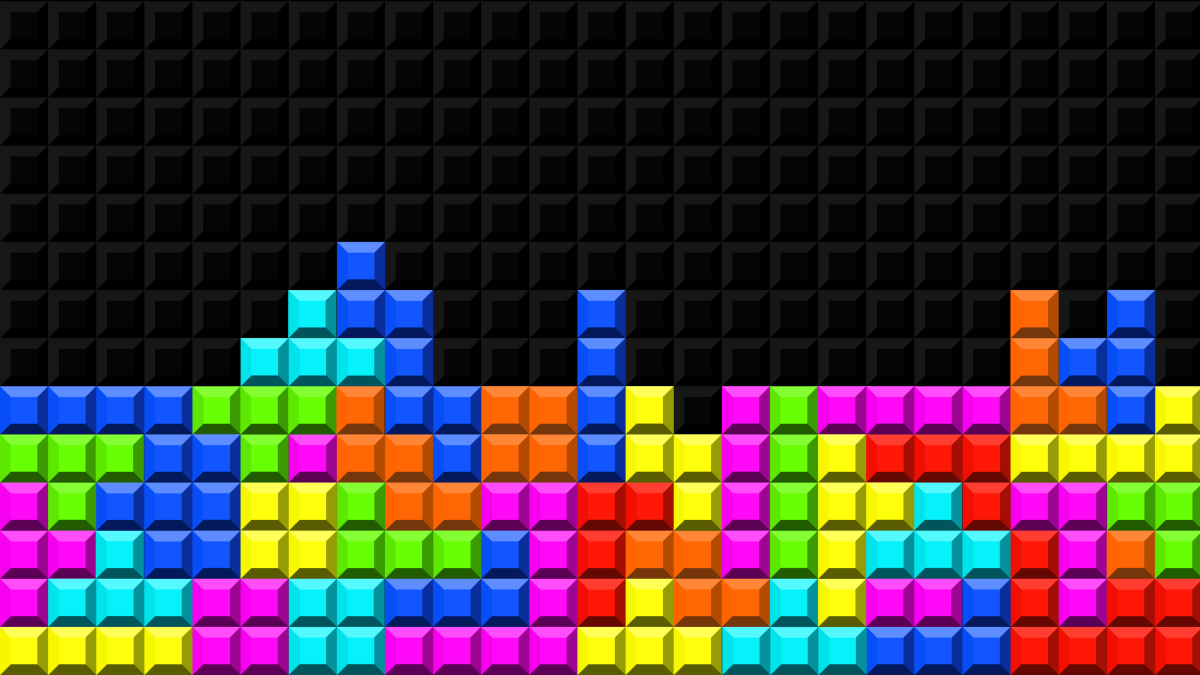
Alexey Pajitnov was a 28-year-old researcher at the Soviet Academy of Sciences in Moscow when he created Tetris on an Elektronika 60 terminal in June 1984. Inspired by pentomino puzzles he’d loved since childhood, Pajitnov simplified the concept from five-square pieces to four—hence “tetra” (Greek for four) combined with “tennis,” his favorite sport. The result: seven distinct shapes (I, O, T, S, Z, J, L) falling into a 10-wide well.
The game spread like wildfire through Moscow’s academic circles via floppy disk copies. Pajitnov’s colleague Vadim Gerasimov ported it to IBM PC by 1986, and from there it leaked westward—no internet required, just hand-passed diskettes.
# The Rights War (1987–1989)
What happened next reads like a Cold War thriller. Multiple companies claimed Tetris rights simultaneously:
- Andromeda Software (UK) licensed rights from a Hungarian intermediary who didn’t actually own them
- Spectrum HoloByte released a PC version in 1987 based on these shaky rights
- Bullet-Proof Software (Japan, led by Henk Rogers) secured console rights after flying to Moscow
- Nintendo and Atari fought bitterly over handheld and console rights
The Soviet government, through ELORG (the state software export agency), ultimately held the cards. Henk Rogers’ legendary face-to-face negotiation in Moscow—where he arrived unannounced and charmed ELORG officials—secured Nintendo the handheld rights. This proved to be the deal of the century.
# Game Boy: The Perfect Marriage (1989)
Nintendo’s Gunpei Yokoi made a pivotal decision: bundle Tetris with the Game Boy instead of Super Mario Land. It was a stroke of genius. The Game Boy launched in 1989 with Tetris as its pack-in title, and the pairing was unstoppable—35 million copies sold on Game Boy alone.
Tetris made the Game Boy a must-have for everyone, not just kids. Businessmen played it on trains. Grandmothers picked it up. The simple, addictive gameplay proved that a game didn’t need color or cutting-edge graphics to be irresistible. The iconic Type-A music (an arrangement of the Russian folk song “Korobeiniki”) became one of gaming’s most recognizable tunes.
# The Console and Arcade Era (1989–1999)
With the rights battles settled (mostly), Tetris appeared on virtually every platform imaginable:
- NES (1989): The console version sold 8 million copies despite the legal chaos
- Arcade (Atari, Sega): Competitive Tetris became a fixture in Japanese game centers
- SNES: Tetris & Dr. Mario (1994) bundled two addictions
- PlayStation: Tetris Plus (1996) added puzzle-solving twists
- N64: The New Tetris (1999) introduced 4x4 square bonuses
Throughout the '90s, Tetris was everywhere—on airline seatbacks, in hotel TVs, on every new console and handheld.
# Modern Renaissance (2001–2019)
The 2000s brought Tetris into the online and mobile era:
Tetris Worlds (2001) introduced infinite spin—a controversial feature letting players rotate pieces indefinitely before locking. Purists revolted, but it opened the game to casual players.
Tetris DS (2006) married Nintendo nostalgia with competitive online play. Six modes, each themed to a classic Nintendo franchise—pure handbeld bliss.
Tetris Effect (2018) was the artistic revelation. Created by Tetsuya Mizuguchi (Rez, Lumines), it wrapped Tetris in synesthetic audiovisual landscapes. Clearing lines triggered musical notes; backgrounds pulsed with particle effects. VR support made it transcendent. Metacritic: 89.
Tetris 99 (2019) threw 99 players into a battle royale—yes, Tetris battle royale. Free on Nintendo Switch Online, it proved the concept worked brilliantly, turning every match into a tense survival contest.
# Competitive Tetris: A Thriving Scene
The Classic Tetris World Championship (CTWC), running since 2010, showcases NES Tetris at superhuman levels. Players like Jonas Neubauer (seven-time champion) and the new wave of “hypertappers” and “rolling” technique players have pushed the game beyond what anyone thought possible.
In 2024, 13-year-old Willis “Blue Scuti” Gibson became the first person to “beat” NES Tetris by reaching the kill screen at level 157—crashing the game after 40 minutes of play. The moment went viral, proving Tetris still captures imaginations four decades later.
# The Science of Tetris
Tetris isn’t just fun—it’s scientifically fascinating:
- The Tetris Effect (the real one): Players report seeing falling blocks when they close their eyes after extended play. Neuroscientists have documented this as a form of procedural memory consolidation
- Brain growth: A 2009 study published in BMC Research Notes showed that playing Tetris for 30 minutes daily increased cortical thickness
- PTSD treatment: Research from Oxford University found that playing Tetris shortly after traumatic events can reduce flashback frequency
- Flow state: Tetris is frequently cited as the perfect example of Mihaly Csikszentmihalyi’s “flow” theory—difficulty that scales precisely with skill
# Why Tetris Endures
What makes a 40-year-old game about falling blocks still feel essential? A few things:
- Instant comprehension: You understand Tetris in seconds. Fill rows. Don’t let blocks reach the top
- Infinite skill ceiling: Simple to learn, impossible to master. The gap between a beginner and a competitive player is staggering
- Universal appeal: No violence, no story required, no cultural barriers
- The “just one more” loop: Every game ends in failure, but you always feel like the next one will go better
# Play Block-Stacking Games Today
Can’t get enough of fitting shapes together? Try Block Drop right here on PSG Online—a free browser-based block-stacking game with classic gameplay and modern visuals. No download needed, just pure puzzle satisfaction.
If you enjoy the spatial reasoning challenge of Tetris, you might also love Isometric Sokoban—a 3D warehouse puzzle that’ll test your planning skills in a whole new dimension.
# What’s Next for Tetris?
With Tetris Effect: Connected bringing cross-platform multiplayer, Tetris 99 still drawing competitive crowds, and new players discovering the game daily, Tetris shows no signs of slowing down. The Tetris Company continues to license the brand carefully, ensuring quality across platforms.
Forty years in, Alexey Pajitnov’s creation remains the purest proof that great game design is timeless. No matter how photorealistic graphics get or how complex games become, there will always be something deeply satisfying about watching a long bar slide perfectly into place.
PSG Online
Author