The Rise of Merge Games: From 2048 to Suika and Beyond
How merge games went from a weekend coding project to a billion-download genre. Explore the history from Threes! and 2048 to Suika Game and modern physics-based merging.
Share
There’s something deeply satisfying about combining two things to make a bigger thing. Whether it’s sliding numbered tiles, merging watermelons, or fusing cartoon creatures, merge games tap into a primal urge to create order from chaos. In just over a decade, this genre has exploded from a small indie experiment into one of mobile gaming’s biggest categories. Here’s how it happened.
# The Foundation: Threes! (2014)
The merge revolution started with Threes!, released in February 2014 by developer Sirvo. Designer Asher Vollmer spent over a year refining the concept: slide numbered cards on a 4×4 grid, combining matching numbers to create higher values (1+2=3, then 3+3=6, 6+6=12, and so on). It was elegant, challenging, and dripping with personality—each number had a face and a name.
Threes! won Apple’s Design Award and widespread critical acclaim. But its lasting legacy would be the wave of games it inspired.
# 2048: The Clone That Changed Everything (2014)
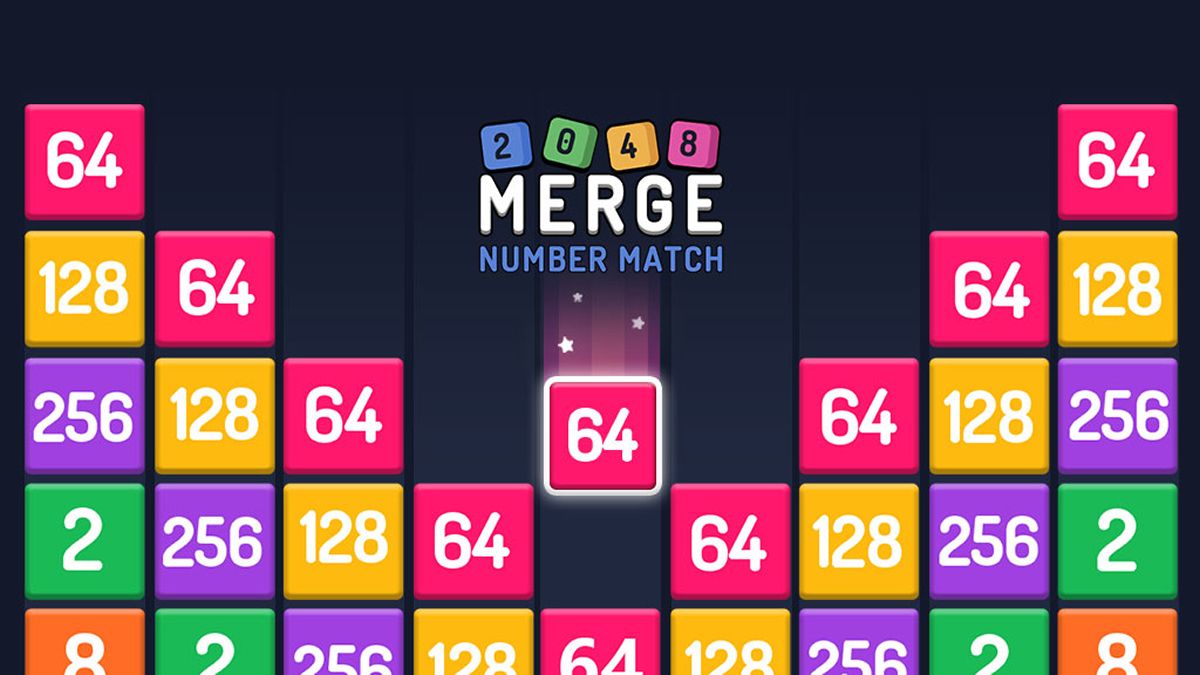
Three weeks after Threes! launched, 19-year-old Italian developer Gabriele Cirulli created 2048 over a weekend. It simplified the Threes! formula: slide tiles in four directions on a 4×4 grid, and when two tiles with the same number collide, they merge into their sum. The goal? Reach the mythical 2048 tile.
2048 was open-source and free to play in any browser. It went viral instantly:
- Millions of players within the first week
- Spawned hundreds of themed variants (Doge 2048, Flappy 2048, 2048 Cupcakes)
- Became a cultural phenomenon covered by every major tech outlet
- Still played by millions daily over a decade later
The controversy around 2048 cloning Threes! sparked an important conversation about game design ethics. Cirulli himself acknowledged the inspiration openly. But the genie was out of the bottle—the “merge” mechanic had proven its mass appeal.
# Why 2048 Worked
- Zero friction: No app download needed, playable in any browser
- Clear goal: The number 2048 gave players a concrete target
- Quick sessions: A game takes 5–15 minutes
- Shareable scores: Players competed for the highest tile reached
- Depth beneath simplicity: Optimal play requires planning several moves ahead, corner strategies, and probability awareness
# Merge Games Go Mobile (2015–2019)
The success of 2048 opened the floodgates. Mobile developers realized that the merge mechanic could be applied to virtually anything:
Merge Dragons! (2017) combined merging with base-building and dragon collection. Match three eggs to hatch dragons, three flowers to grow gardens, three coins to build treasure vaults. Gram Games’ hit generated over $500 million in revenue.
Merge Town! and Merge Plane! simplified further—just drag identical items onto each other and watch them evolve. These idle-merge hybrids proved you could strip the puzzleto its essence and still hook players.
Merge Mansion (2020) added narrative mystery to merging. Players merged items to renovate a mansion while uncovering a grandmother’s dark secrets. The combination of merge mechanics, home decoration, and storytelling created a massive hit—over 50 million downloads.
The genre was growing, but the next big leap would come from an unexpected place.
# Suika Game: The Watermelon That Broke the Internet (2021–2024)
In December 2021, Japanese developer Aladdin X released Suika Game (Watermelon Game) on the Nintendo Switch eShop in Japan. For two years it quietly gathered a following until October 2023, when Japanese streamers and VTubers discovered it and sent it viral globally.
The concept merged two beloved mechanics: drop small fruits into a container (Tetris-style), and when two identical fruits touch, they combine into the next larger fruit (cherry → strawberry → grape → … → watermelon). Physics simulation makes fruits roll, bounce, and settle unpredictably.
# Why Suika Was Revolutionary
- Physics-based merging: Unlike grid-based games, fruits moved organically, creating unexpected chain reactions
- Visual satisfaction: Watching two large melons merge with a satisfying pop was genuinely delightful
- Streaming appeal: The unpredictability made it perfect for live reactions
- Simple but deep: Optimal play requires understanding physics, planning placement, and managing space
Suika Game sold over 9 million copies on Switch alone and spawned countless browser clones, proving that the merge genre still had room for innovation.
# The Merge Genre Today
In 2025–2026, merge games are everywhere:
- Merge RPGs: Combine heroes, weapons, and spells in games like Merge Legends
- Merge puzzles: Physics-based merging with strategic elements
- Idle mergers: Tap-and-combine games perfect for background play
- Competitive merging: Multiplayer merge games with leaderboards and tournaments
The genre has generated billions in revenue across mobile platforms and shows no signs of slowing down.
# The Psychology of Merging
Why are merge games so addictive? Behavioral psychologists point to several factors:
- Completion drive: We’re wired to want to see the “next thing”—what comes after merging two items
- Tidying instinct: Combining clutter into single, larger items satisfies our desire for order
- Variable reward: You never know exactly when a chain reaction will cascade
- Clear progression: Each merge is tangible progress you can see and feel
- Low-stakes experimentation: You can try strategies without heavy penalties
# Play Merge Games Right Now
Ready to test your merging skills? PSG Online has you covered:
- Number Merge 2048: The classic tile-sliding, number-merging puzzle. Swipe to combine tiles and chase the legendary 2048 tile—all free in your browser
- Fruit Merge: A physics-based fruit-merging game inspired by Suika Game. Drop fruits, watch them bounce and combine, and try to create the ultimate mega fruit
Both games are free, require no download, and work on desktop and mobile. Whether you prefer the strategic precision of grid-based merging or the chaotic fun of physics-based combining, there’s a merge game waiting for you.
# What’s Next for Merge Games?
The merge genre continues to evolve. We’re seeing experiments with AR merging, multiplayer competitive modes, and increasingly creative themes. The core appeal—combine two things, get something better—is so fundamental that it can be wrapped in virtually any skin or setting.
From Asher Vollmer’s carefully crafted Threes! to viral sensations like 2048 and Suika Game, merge games have proven that sometimes the simplest ideas have the longest legs. As long as humans enjoy the satisfaction of bringing order to chaos, merge games will keep combining their way into our hearts.
PSG Online
Author